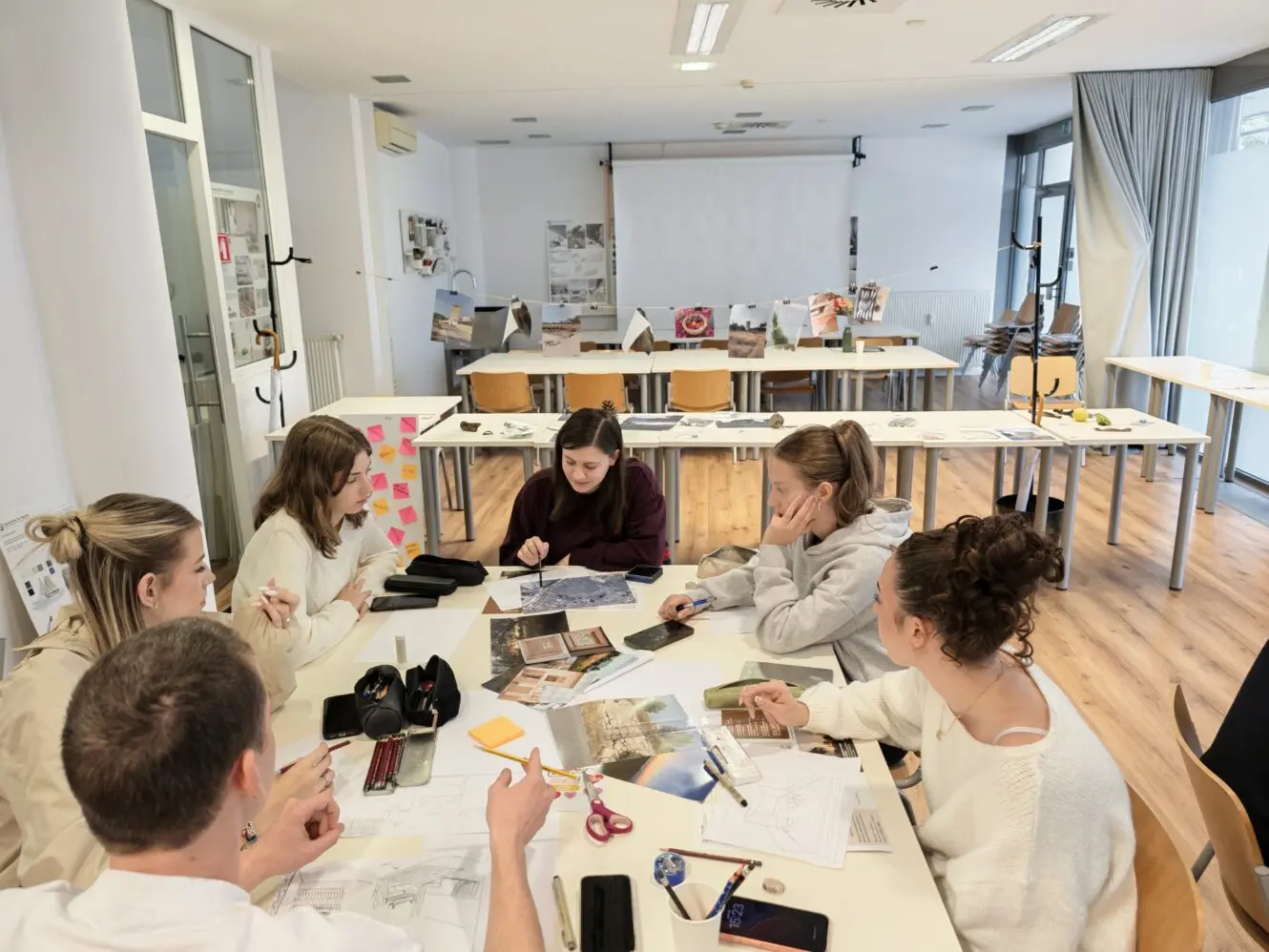



On 24 July 2025, Jasna Hrovatin and Jordan Berginc met with Mateja Rakičevič and representatives of the study group preparing the route for vulnerable groups in the Volčji Potok Arboretum. As part of the Multisensory project, we will install three sculptures in the park adapted for the blind and visually impaired.
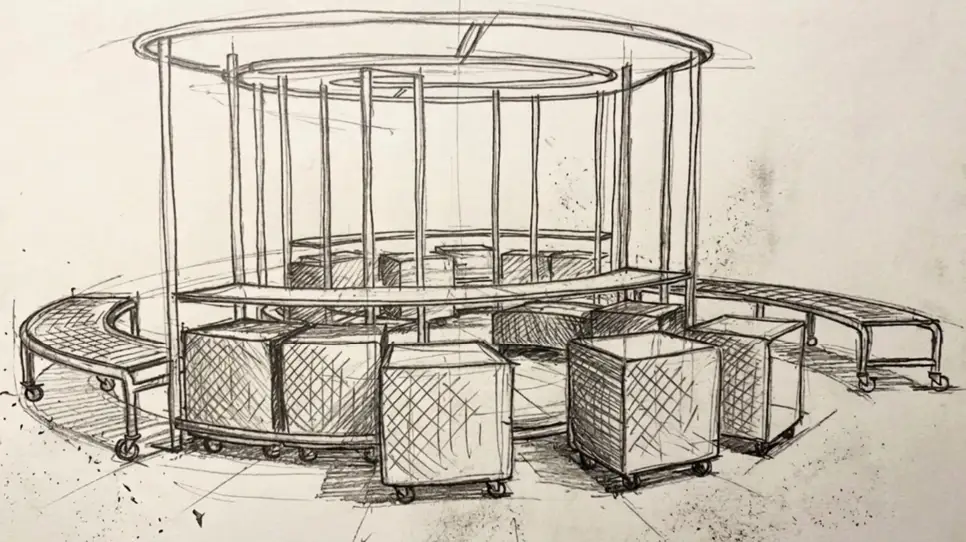
First, we presented various concepts prepared by representatives from Slovenia, Croatia, and Serbia. An interesting discussion developed about the challenges the Arboretum had encountered with similar projects, which will be of great help to us in our further work.
Since in the project we promised to draw on cultural heritage and use recycled materials, this was the guiding principle of all concepts.
-
The Slovenian group — Živa Slavec, Jasna Hrovatin, and Stela Primc — decided to use one or more ceramic columns to present the close connection of Slovenian culture and folklore with nature. Slovenian fairy tales and legends are full of animals, spirits, and beings from the natural and supernatural worlds. The sculpture will invite the blind and visually impaired to experience them with all their senses.
-
Iris Lobaš Kukavičić from Croatia will create a sculpture with a wavy surface representing the motion of the sea characteristic of Dubrovnik, her hometown. The sculpture is conceived as a tactile relief surface, reminiscent of the traces left by the sea on a sandy shore. It will be accompanied by the sounds of the sea.
-
Ivan Bon from Serbia will create a mythical creature inspired by the Vinča culture. It will be made from a wooden structure covered with a mosaic of recycled ceramics. Visitors will also be able to hear sounds emitted by the mythical creature.
After presenting the concepts, we took a walk through the park to look for possible locations for the sculptures. We agreed that before the sculptures are installed, all participants involved in their creation will meet with the Arboretum team to agree on the final locations.
Funded by the European Union. Views and opinions expressed are however those of the author(s) only and do not necessarily reflect those of the European Union or the European Education and Culture Executive Agency (EACEA). Neither the European Union nor EACEA can be held responsible for them.